
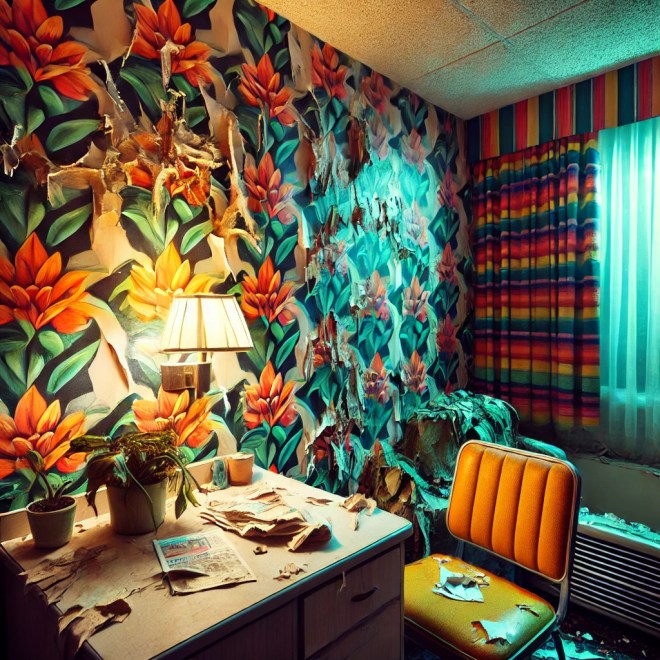
I’m calling it. Once considered the epitome of luxury, the hotel-style interiors trend has reached its high point.
Mass application has diluted its appeal, replacing aspiration with a predictable, formulaic ‘lacks’ that feels uninspired. In the wrong hands, it’s a pastiche of poor taste. Originally designed to evoke feelings of escape and pure indulgence, the perceived opulence of Hotel-style has become the exertion of luxe in a state of flux.
When I refer to the inimitable Wendy Bergman of Bergman & Co (Chancery Lane, Poodle Bar & Bistro, Studio Amaro), she recalls how the pandemic forced us into our homes, citing that period as ‘a likely contributor to our elevated desire to be surrounded by more homely, natural environments, where we felt comforted.’ While that may be true, the Hotel-style I’m referring to is not reflected in Bergman’s richly layered commercial work, which spans some of the best interiors in the city.
Nicholas Pucinischi at Nisk Design, who specialises in architectural building design and interiors for residential and commercial projects says he’s always enjoyed hotel spaces that ‘feel like a home away from home, with mood lighting and soft detailed touch points, spaces that evoke a sense of luxury and feel aspirational.’
So what of the ubiquitous Hotel-style overlay applied to ordinary public gathering spots like airport amenities, shopping centres, store fit outs and GP waiting rooms? With their hurried construction, low-cost materials and cookie-cutter furniture, the spaces created as a sense of place can feel more disposable than durable. And, they are often poorly maintained, with peeling wallpaper, marked floors and filthy carpet, bringing a sense of great sorrow and disappointment, like you’re trapped inside the saddest Hotel.
The great ‘Hotelification’ of Melbourne blends home and hotel, transforming high-end apartments with luxurious, hotel-like features—such as well-designed lobbies, five-star amenities, and on-site concierge services.

The great ‘Hotelification’ of Melbourne blends home and hotel, transforming high-end apartments with luxurious, hotel-like features—such as well-designed lobbies, five-star amenities, and on-site concierge services. This trend of ‘hotel imaginaries’, a set of design, spatial, and management features, appeals to high-end buyers and downsizers seeking the comfort of home, with the convenience of hotel services. In her article ‘Could hotel imaginaries transform high-rise living in Melbourne?’, Louise Dorignon emphasises the need to understand how this design approach affects residents’ daily lives and their sense of connection with the surrounding community.
Looking ahead to major developments and public use spaces, Pucinischi says we can look forward to seeing more interaction and sensory experiences for communal spaces, as designers play with lighting, digital imagery and sounds. Bergman believes that because it brings joy and harmony, nature itself will inspire, with natural colour tones, materials and a lessening of hard sharp forms in use. She shares that ‘nooks and personal moments are key to designing and developing appropriate human use spaces that allow the desired feeling of homeliness and safety to be elevated.’
We can look forward to seeing more interaction and sensory experiences for communal spaces, as designers play with lighting, digital imagery and sounds.
As we look back on this era, could Hotel-style ever be as iconic as Art Deco’s bold lines and colours, luxurious fabrics and mirrored metallic finishes, or Minimalism’s elegant simplicity? Will the memory prompt knowing shudders of cold, unimaginative places—generic urban landscapes devoid of personality? When I ask how we might look back on this period in history, Wendy describes the present as, ‘a period of ‘dramatic change’, with unsettling and unknown financial and political shifts ahead.’ Our experience of now, coupled with a reckoning with technology, places us in an extremely volatile and formative position. My prediction is that curators and practitioners of good taste will remain as relevant as ever, heading in to the future.
Wendy Bergman
Bergman & Co https://www.bergmanandco.com/
@bergmanandco
Nicholas Pucinischi
Nisk Design
@nisk_design
Read Louise Dorignon’s article on Cities People Love https://citiespeoplelove.co/article/could-hotel-imaginaries-transform-high-rise-living-in-melbourne

 The Garb Wire